INNOVATIVE TEACHING MATERIAL ON
HEAT TRANSFER
Innovated by:
Norven G. Baylan-MT-II. MA-IDT
MOGCHS-Science Faculty
Heat (physics), in physics, transfer of energy from one part of a substance to another, or from one body to another by virtue of a difference in temperature. Heat is energy in transit; it always flows from a substance at a higher temperature to the substance at a lower temperature, raising the temperature of the latter and lowering that of the former substance, provided the volume of the bodies remains constant. Heat does not flow from a lower to a higher temperature unless another form of energy transfer, work, is also present. Power.
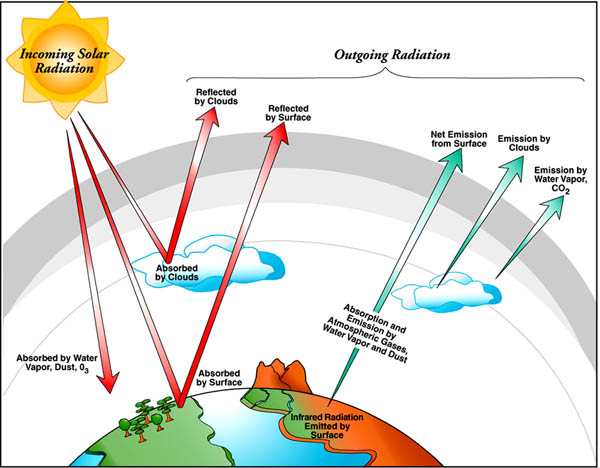
The physical methods by which energy in the form of heat can be transferred between bodies are conduction and radiation. A third method, which also involves the motion of matter, is called convection. Conduction requires physical contact between the bodies or portions of bodies exchanging heat, but radiation does not require contact or the presence of any matter between the bodies. Convection occurs when a liquid or gas is in contact with a solid body at a different temperature and is always accompanied by the motion of the liquid or gas. The science dealing with the transfer of heat between bodies is called heat transfer.
Microsoft ® Encarta ® 2009. © 1993-2008 Microsoft Corporation. All rights reserved.
To view the video please visit the following sites.
http://www.youtube.com/results?search_query=conduction+convection+radiation&aq=3
http://www.youtube.com/watch?v=77R4arwD8G8
http://www.youtube.com/watch?v=LPvn9qhVFbM&feature=related
Illustrations:

Conduction

Convection Current

![[heat-transmittance-means.jpg]](file:///C:/Users/SPINNY~1/AppData/Local/Temp/msohtmlclip1/01/clip_image008.jpg)
References:
http://www.ux1.eiu.edu/~cxtdm/met/radiation_pres.jpg
http://stephensteach-wiki.wikispaces.com/file/view/conduction.jpg/32624703/conduction.jpg




No comments:
Post a Comment