Saturday, April 30, 2011

The I-SPOT of Learning and Smooth Interpersonal Relationship (SIR) with the Mentor and the learner.

Original formulation of Mr. Norven G. Baylan based on Actual teaching Experienced in the classroom for the past 15 years.

An innovative style of learning strategies that will establish greater learning heights in the part of the students/learners.

The I-SPOT= Intrinsically Motivated (I)+(SIR)

Introduction: "The degree of Stimulus presented is tantamount to the response"

I stands for Intrinsically motivated students, in every classroom situation, there is so called students that needs to be motivated and the students that does not needs to arouse their interests, this is called the INTRINSICALLY MOTIVATED LEARNERS. Will in fact student that has an I-Spot or in electronic signal called WIFI spot or "global village "establishes greater heights of learning than those students so called EXTRENSICALLY MOTIVATED or their motivation depend much to the influence of the teaching strategies / learning styles of a teacher plus considering the other factors as to mention like the number of students per classroom, size of the classrooms, learners mental set, and in short the IQ and the EQ of an individual. The I-SPOT is considered as the innate tendency of the students that has already a minimum level of engaging to the lessons, and has focus. Meaning these students have the interest when they reported to their respective classroom. And are ready to gasp ideas, concepts and are attentive in the discussions and much more in the evaluation.

Advantages of I-SPOT:

Collaborates Learning

Capable and responsible in their lessons

Etc

The reason why it is formulated is to give the emphasis to the student's that needs focus in their studies as to establish correct study habit while they are still in the lower years. The non- intrinsically group of students are the most challenging part of our daily work, simply because they are the one that badly needs our care and attention. Most our mentors now a days but not all would say "Let us be responsible of your learning", unknowingly failed to examine why other students do not have focus in the classrooms and remained second to the last in the previous results of the 1999 Third international Math and Science study TIMSS revealed that student poor in conceptual understanding, reasoning and analysis, and communicative skills that they can 't express their own ideas even in a simple concepts or situations, which TIMSS Science test focuses in three categories : factual knowledge, conceptual understanding and analysis and reasoning.

Being the most important factor that affects students learning, the teacher, therefore, needs to apply differentiated instruction s, shift from traditional to global teaching strategies that suits to our diverse individuals in the classroom. It is our responsibility to use or adopt I-SPOT in our student to be sensitive and assess properly the student instead of content understanding make it concept understanding instead of skill competence make it process performance, and much more important if we may offer a remediation to our students that needs help in their learning problems.

Original Composition of: Mr. Norven G. Baylan

MOGCHS, Science Department

Schematic Diagram of I-SPOT

Wednesday, April 27, 2011

INNOVATIVE TEACHING MATERIAL ON

HEAT TRANSFER

Innovated by:

Norven G. Baylan-MT-II. MA-IDT

MOGCHS-Science Faculty

Heat (physics), in physics, transfer of energy from one part of a substance to another, or from one body to another by virtue of a difference in temperature. Heat is energy in transit; it always flows from a substance at a higher temperature to the substance at a lower temperature, raising the temperature of the latter and lowering that of the former substance, provided the volume of the bodies remains constant. Heat does not flow from a lower to a higher temperature unless another form of energy transfer, work, is also present. Power.

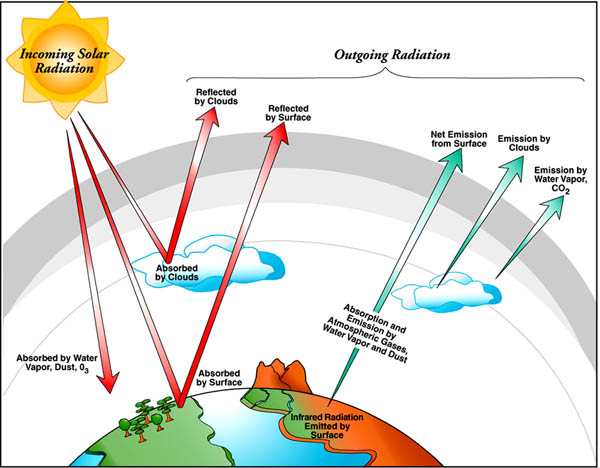
The physical methods by which energy in the form of heat can be transferred between bodies are conduction and radiation. A third method, which also involves the motion of matter, is called convection. Conduction requires physical contact between the bodies or portions of bodies exchanging heat, but radiation does not require contact or the presence of any matter between the bodies. Convection occurs when a liquid or gas is in contact with a solid body at a different temperature and is always accompanied by the motion of the liquid or gas. The science dealing with the transfer of heat between bodies is called heat transfer.

Microsoft ® Encarta ® 2009. © 1993-2008 Microsoft Corporation. All rights reserved.

To view the video please visit the following sites.

http://www.youtube.com/results?search_query=conduction+convection+radiation&aq=3

http://www.youtube.com/watch?v=77R4arwD8G8

http://www.youtube.com/watch?v=LPvn9qhVFbM&feature=related

Illustrations:

Conduction

Convection Current

[heat-transmittance-means.jpg]

References:

http://www.ux1.eiu.edu/~cxtdm/met/radiation_pres.jpg

http://stephensteach-wiki.wikispaces.com/file/view/conduction.jpg/32624703/conduction.jpg

https://blogger.googleusercontent.com/img/b/R29vZ2xl/AVvXsEjjtkRu5VhDyqaTO0sNjxfaTM4g8smitEnlEEPnAF_8r3j41C7dsr2PkViqJjLyKnFSXBx9lrPXa5zyN77xs5Q0j177c2NKliFT9XLY3QU80-mPBLsEIKCIR48ehGR_jmsYQy0e3g/s1600-h/heat-transmittance-means.jpg

Mc Nevron has stumbled on a secret message left by aliens who stopped on earth on their way back home. Find out what the secret message is by answering each item below. Write the letter in the blank that matches with the given answer.

43-32=A, 394-173=E, 515-203=L, 987-777=S, 708-206=N

8,154-6,053=0, 4,892-1,621=R, 5,866-2814=V,

10,387-10,289=C, 20,887-20,777.5=I , 16288-15279=T

L E A R N T O

___ ___ ____ ____ ____ ____ ____

312 221 11 3, 271 502 1009 2,101

L O V E

____ _____ _____ _____

312 2, 101 3, 052 221

S C I E N C E

_____ _____ _____ _____ ______ _____ ______

210 100 110 221 502 100 221

Answers: A-11, E-221, L-312, S-210, N-502, O-2,101, R-3,271, V-3,052, C-98, I-110, T-1009,

Revised by: Mr. Norven G Baylan-MOGCHS FacultyExample of a Rubric

Multiple-choice question are easy to score. Open-ended questions or performance tasks like in the web quest require the use of rubrics for the teacher to objectively score the answers of students.

Rubrics require levels of performance and criterion for each level of performance. There are four levels that are easy to use and provide a reasonable amount of discrimination. Good rubrics minimize the biases inherent in human judgment.

Sample of Open-ended item with rubric

During a storm, Nancy noticed that she always heard thunder shortly after she saw of lighting. Explain why there is a difference in time between seeing lightning and hearing thunder.

Rubric for Scoring the Answer or Response

Points System

3 points –Excellent

2 points-Adequate Response

1- point –Too brief to evaluate

0-poit for no response

Prepared by: Norven G. Baylan-MT-II

MOGCHS, Cagayan de Oro City

9000

MOGCHS

High School Science I (Integrated Science)

Name:______________________Year/Section_____________________________

Teacher:____________________Date:___________Score_______________

Investigating (Scientific Method)

Why do we need to acquire investigation skills? The answer is straight-forward. Everybody needs to investigate not only to gain knowledge but also to clarify or verify what is already known. A doctor asks questions about what your complaint is before he or she conducts tests. A fishpond owner investigates what causes fish kill. A farmer studies the effects of a particular pesticide on locusts that eat rice plants. A cook determines the best combination of ingredients for his or her new recipe. A teacher needs to determine why students are not doing well in class.

Investigating involves several steps, namely: identifying the problem; gathering information about the problem; formulating a hypothesis; designing experiments to test the hypothesis; collecting, recording and organizing data; analyzing and interpreting data; making conclusions based on the data gathered; and writing the report.

The following example shows how a student solved a problem using the steps enumerated above.

Molly observed that the soil in his father’s garden is sandy. Few plants grow in their garden. He thought that adding moss to the sand would improve its water holding capacity. He knows that roots of plants improve the water holding capacity of soils.

He collected sand and sieved it. He also collect moss and dried it. Then he prepared 5 cans of the same kind and size, weighted the different amounts of sand and moss as shown in the table (below), and put them in corresponding cans, He added 120 mL of water to each setup, He collected and measured the amount of water that passed through in 10 minutes. He recorded the observations in his notebook and repeated the activity three times after 30-minute interval for each trial.

His experiment was designed as follows:

Setups

Amount of Sand (g)

Amount of Dry Moss (g)

Can A

100

0

Can B

80

20

Can C

60

40

Can D

50

50

Can E

40

60

The data collected are shown below:

Setups

Trial 1 (mL)

Trial 2 (mL)

Trial 3 (mL)

Can A

112

116

112

Can B

96

94

93

Can C

80

82

83

Can D

78

76

80

Can E

54

58

58

Self Assessment Question (SAQ) Identify and describe the following parts of the investigation: (5) points each item.

a. problem that Molly wanted to solve________________________________________

b. hypothesis or the possible effect of adding moss to sand_____________________

_________________________________________________________________________

c. basis for the hypothesis__________________________________________________

_________________________________________________________________________

d. design to test the hypothesis_____________________________________________

_________________________________________________________________________

e. dependent and independent variables in the experiment_____________________

_________________________________________________________________________

f. control setup_____________________________________________

_______________________________________________________

g. experimental design____________________________________________________

_______________________________________________________

Parents Signature/Date

Mother:___________

Father:____________

Science Activity No 3

Norven Baylan-MT II, MA-IDT

Science Teacher

MOGCHS, Cagayan de Oro

For comment(s) e-mail me at zandrogabriel@yahoo.com

Or visit my blog: http//www.mogchs_science1.com

If and then as magic words in formulating hypothesis

An innovative writing by NORVEN G. BAYLAN

Inspired from Jenny Jinks@2008

if [if]

(plural ifs) CORE MEANING: a conjunction used to indicate the circumstances that would have to exist in order for an event to happen.

Examples:

You can come with us if you want to.

Are you thinking of buying a new car? If so, talk to us first.

then [en]

CORE MEANING: an adverb used to indicate a particular time in the past or future.

Examples:

We were much happier then.

Until then, he'll be staying with me.

Ultra violet light may cause skin cancer, Growth of plant may be affected by the light from the sun. All of the above mentioned are examples of hypothesis because it use the tentative word "may" But you must careful on how to distinguish a statement like this "The clouds are dark, it might rain"-this is prediction, or if we write "Ultra violet light causes skin cancer" this could be a conclusion. One way to prevent such mistakes is to formalize the form of hypothesis, how to formalized hypothesis, example "If skin cancer is related to ultra violet light, then people with a high exposure to UV light will have a higher frequency of skin". "If pechay is related to rotten leaves, twigs, fruits, flowers, and other decayed plants and animals /humus soil, then exposing pechay to a non-humus soil will result to changes in growth". You will notice that those statements contains words IF and THEN. The two are necessary to formalized hypothesis. But take note not all if and then statement are hypothesis. For example "If I play lotto, then I will get rich" this is a simple prediction. In a formalize hypothesis a tentative relationship is stated, for example if the frequency of winning is related to frequency of buying little tickets "then is followed by a prediction of what will happen if you increase or decrease the frequency of buying ticket. If you keep on asking to yourself that if one thing is related to another, then you should be able to test it. Take note that hypothesis same as tentative answer to a problem, a partial or scientific guess or an educated guess. Valid hypothesis can be tested it means "testable" you need to measure both "what you do" and "what will happen".

Often times a hypothesis is written like this "if _____(I do this) ______, then ______(this) _____will "happen" (fill in the blanks with the appropriate information for your own experiment.

Concrete examples of hypothesis and identifying the variables.

1. If I open the faucet ( faucet opening size is the independent variable), then it will increase the flow of water (flow of water is the dependent variable).

2. Raising the temperature of a cup of water (temperature is the independent variable) will increase the amount of sugar that dissolve's (the amount of sugar is the independent variable).

3. If a plant receives fertilizer (having fertilizer is the independent variable). Then it will grow to be bigger than a plant that does not receive fertilizer (plant size is the dependent variable).

What is a genuine hypothesis?

A hypothesis is a statement that proposes a possible answer/explanation to some phenomenon or event. A useful hypothesis is a "testable" statement which may include a prediction. A hypothesis must not be confused with a theory , theories are based on general explanation based on a large amount of data. For example, the Darwin theory of evolution applies to all living things and is based on a wide range of observations. However there are many things about evolution that are not fully understood Such as gaps in the fossils record. Many hypothesis have been proposed and tested.

For e-sharing and comments please e-mail

gabulenevron@live.com.ph or zandrogabriel@yahoo.com

Microsoft® Encarta® 2009. © 1993-2008 Microsoft Corporation. All rights reserved.